Expertise brought together
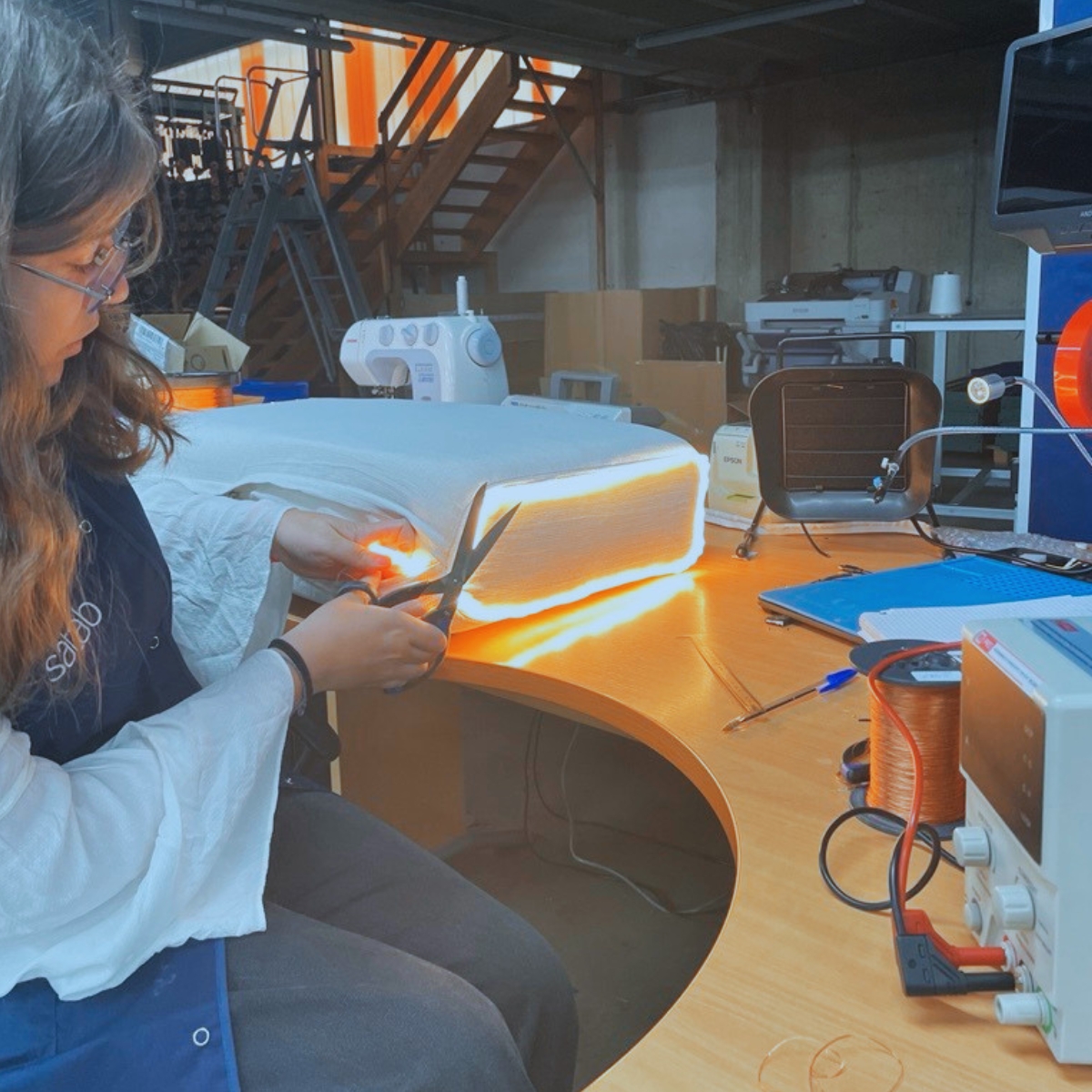
One of The Hub’s key strengths lies in the complementary expertise it brings together. Textile, electronic and mechanical specialists work collaboratively on the same projects. Engineers, technicians and specialists can share their knowledge and approaches to address a common challenge.
This close collaboration means that each discipline is not considered in isolation. Instead, the focus is on how they can work together from the earliest stages of design. This is particularly important in the field of smart textiles, where performance depends as much on the integrated technology as on its interaction with the material, its environment and its intended application.
What is mechatronics?
Mechatronics brings together several disciplines, including mechanics and electronics. Its aim is to design systems in which these different technologies work together.In the context of smart textiles, this approach takes on a particular dimension. Textiles have their own properties and constraints, including flexibility, deformation, thickness, assembly methods, maintenance and resistance to environmental conditions.
Mechanical and electronic components must therefore be designed with these specific requirements in mind.
At Eweave, mechatronics plays a key role in addressing precisely these integration challenges.
Designing a solution as a whole
When developing a new Eweave product, the question is not simply whether the individual components work. It is also about determining how they will be integrated into the product.
How should they be secured? How should they be connected? How should they be protected? How can the textile retain its properties? How should the different elements be assembled? And how can the solution be manufactured reliably and consistently at a later stage?
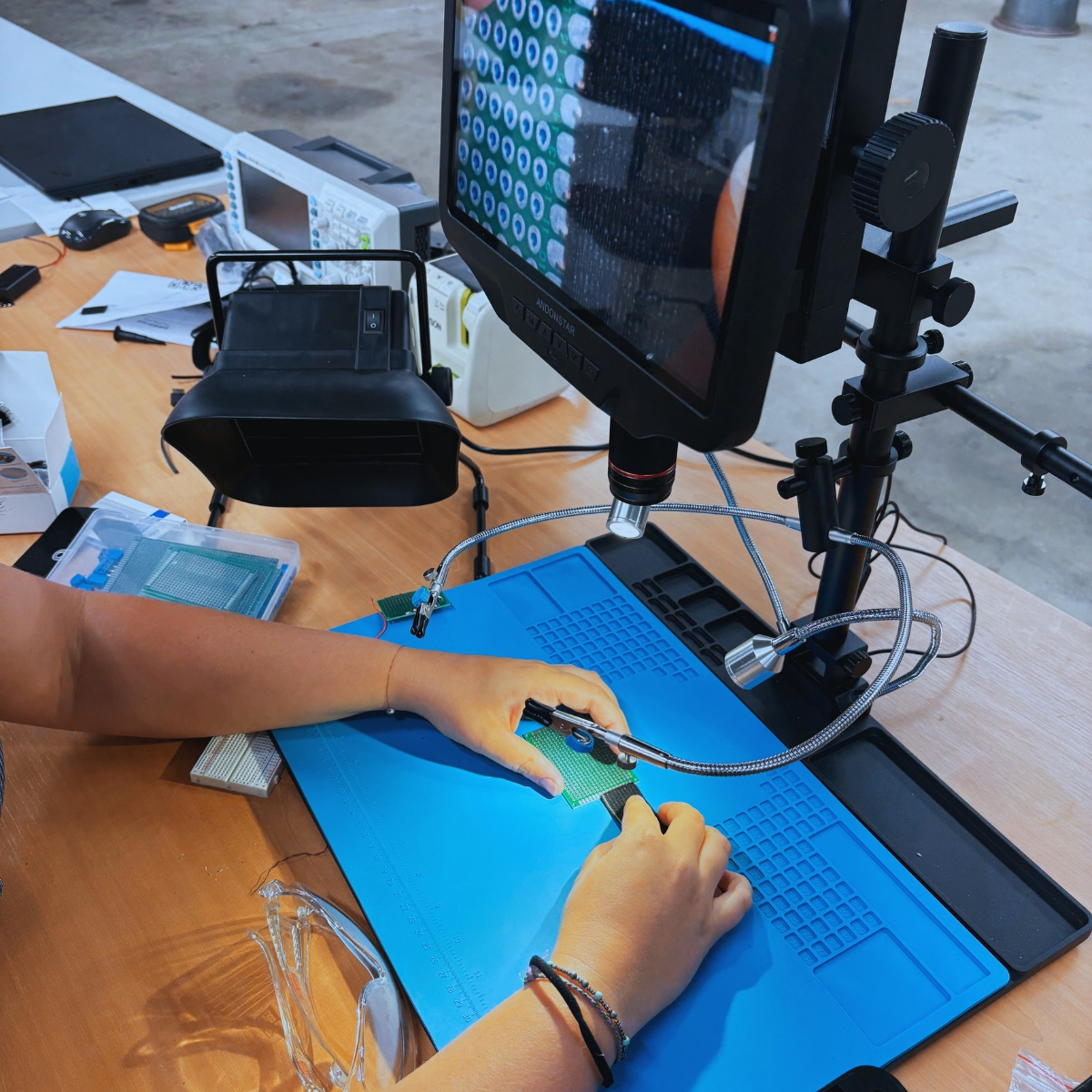
These considerations come into play from the earliest stages of design. The mechatronics division therefore works on the various technical elements required to integrate our smart textiles, including electronic components, mechanical parts, fastening and assembly systems, connections and interfaces.
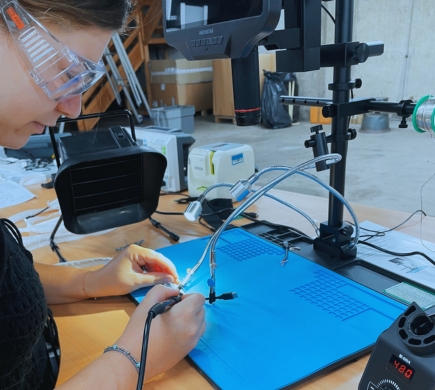
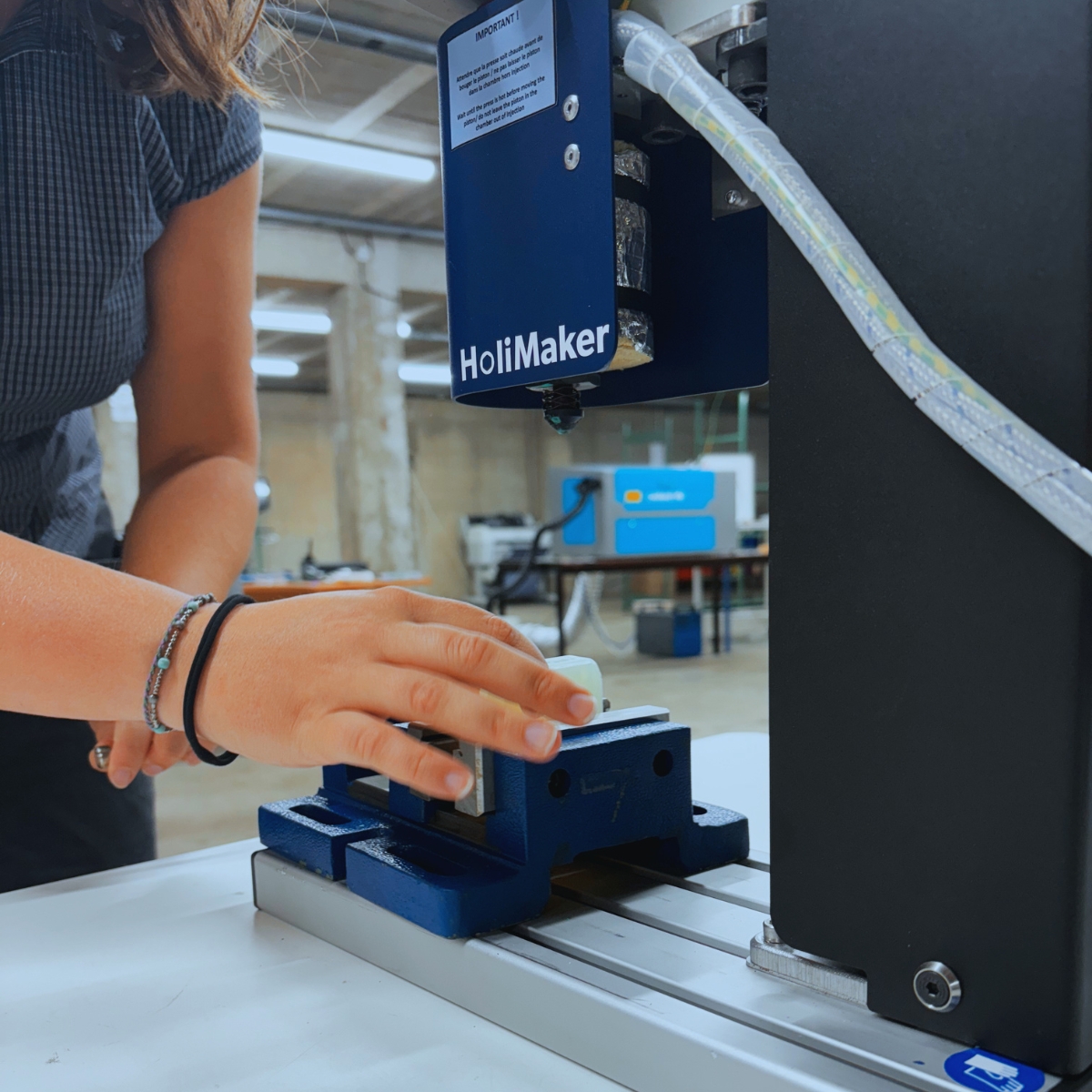
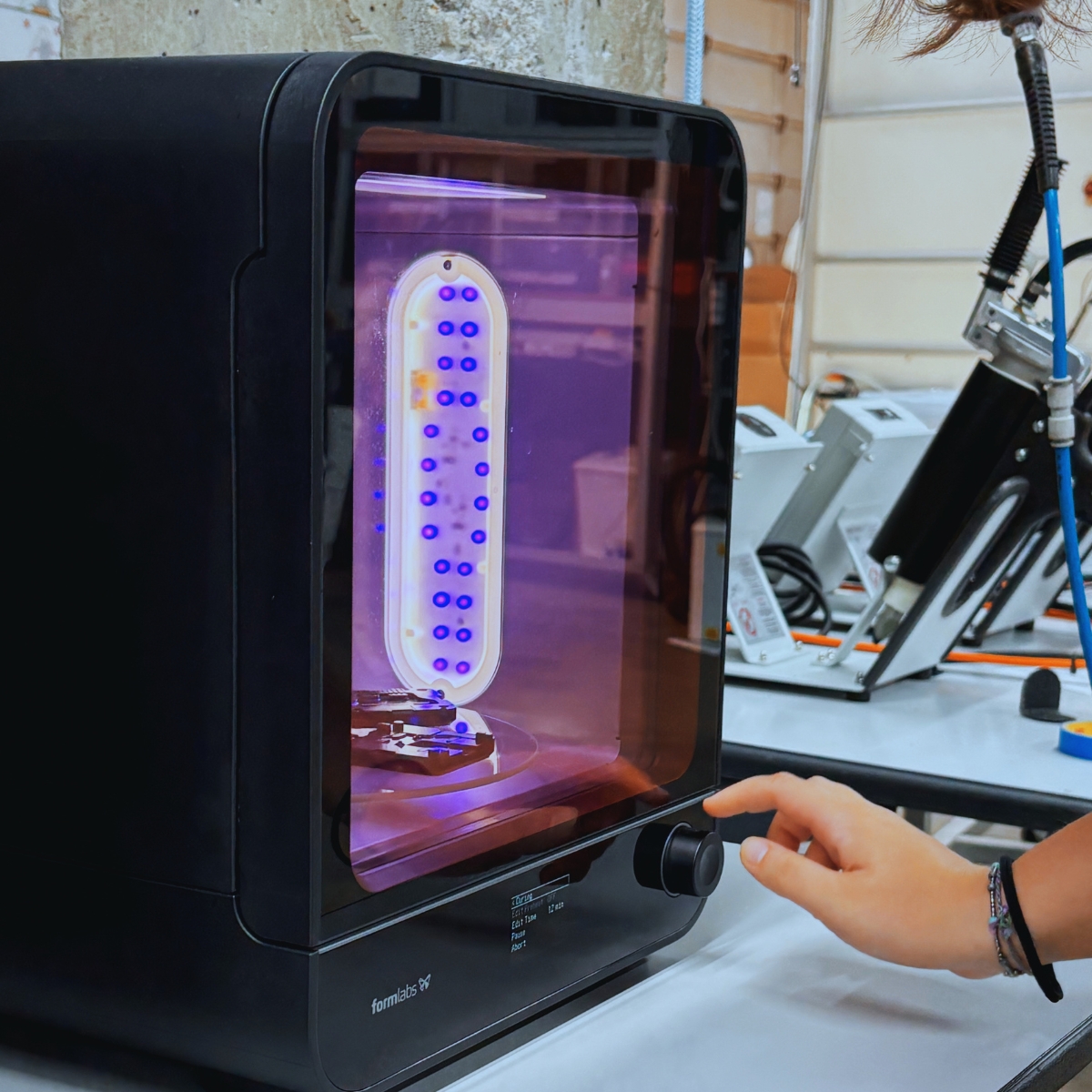
This expertise is built on highly practical skills, including component assembly and integration, soldering, overmoulding, mechanical engineering, electronics and 3D printing. These complementary capabilities make it possible to adapt technical components to the specific requirements of the textile and the product into which they will be integrated.
An approach designed for real-world products
Each component must fit into a coherent overall system while meeting the requirements of its intended application. Heated textiles, capacitive textiles and mechanical sensing systems each involve different components, interfaces and integration constraints. Mechatronic design must therefore be tailored to each project.It is this ability to work at the intersection of textiles, mechanics and electronics that makes it possible to develop solutions suited to their intended applications and the products into which they will be integrated.
At Eweave, this expertise complements our textile know-how, supporting projects from the design of technical components through to their integration into the final product.
Find out more?