Why monitor the condition of a textile duct?
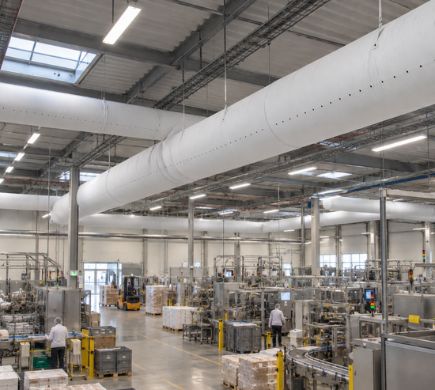
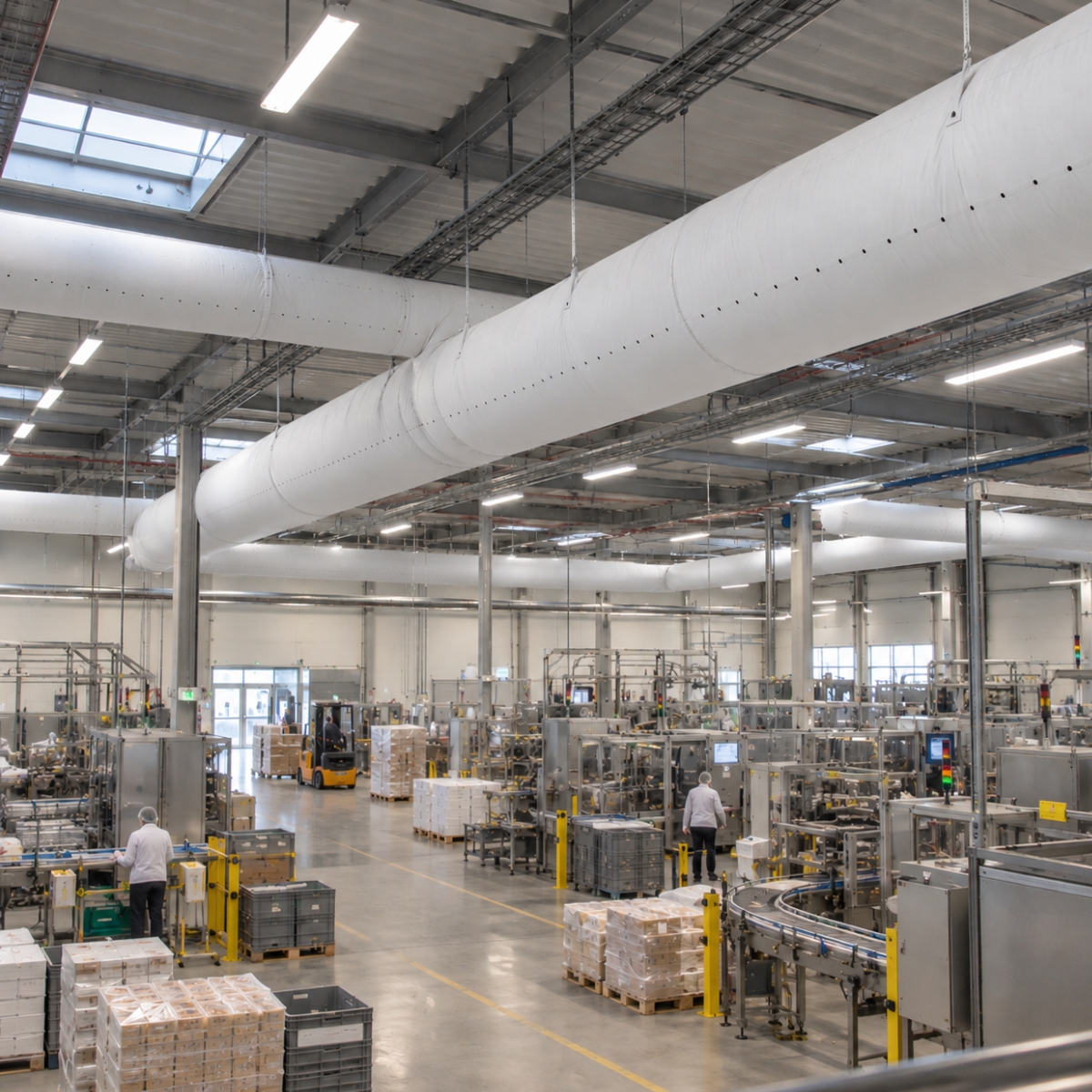
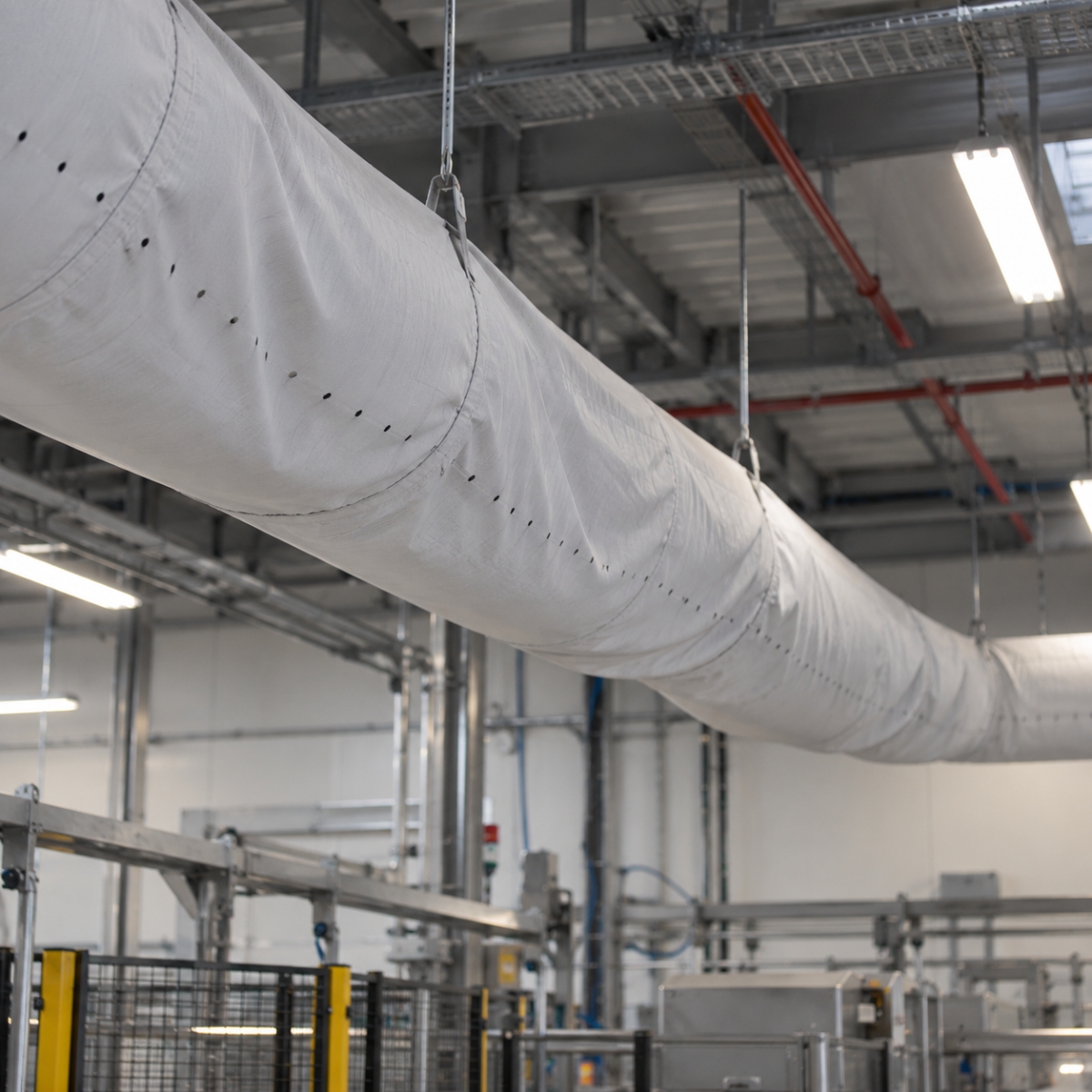
Textile ducts are used in many industrial environments to transport, distribute or contain air. Depending on their design, they may operate under pressure and be exposed to changes in operating conditions, inflation and deflation cycles, as well as various mechanical stresses.
In this context, a loss of pressure can affect the behaviour of the duct. Its geometry may change, the material may relax, its tension may decrease or be distributed differently.
The challenge is therefore twofold: detecting that a change is occurring, but also detecting it early enough to take action.
How can a loss of pressure in a textile duct be detected?
A loss of pressure in a textile duct can be detected by directly measuring the air pressure, but also by monitoring the changes it causes in the textile material. As the pressure decreases, the duct may change shape or its tension may vary. If these mechanical changes can be measured, they can then serve as an indicator of the duct's condition. This is precisely the principle behind the solution developed by Eweave.
How does the tape work?
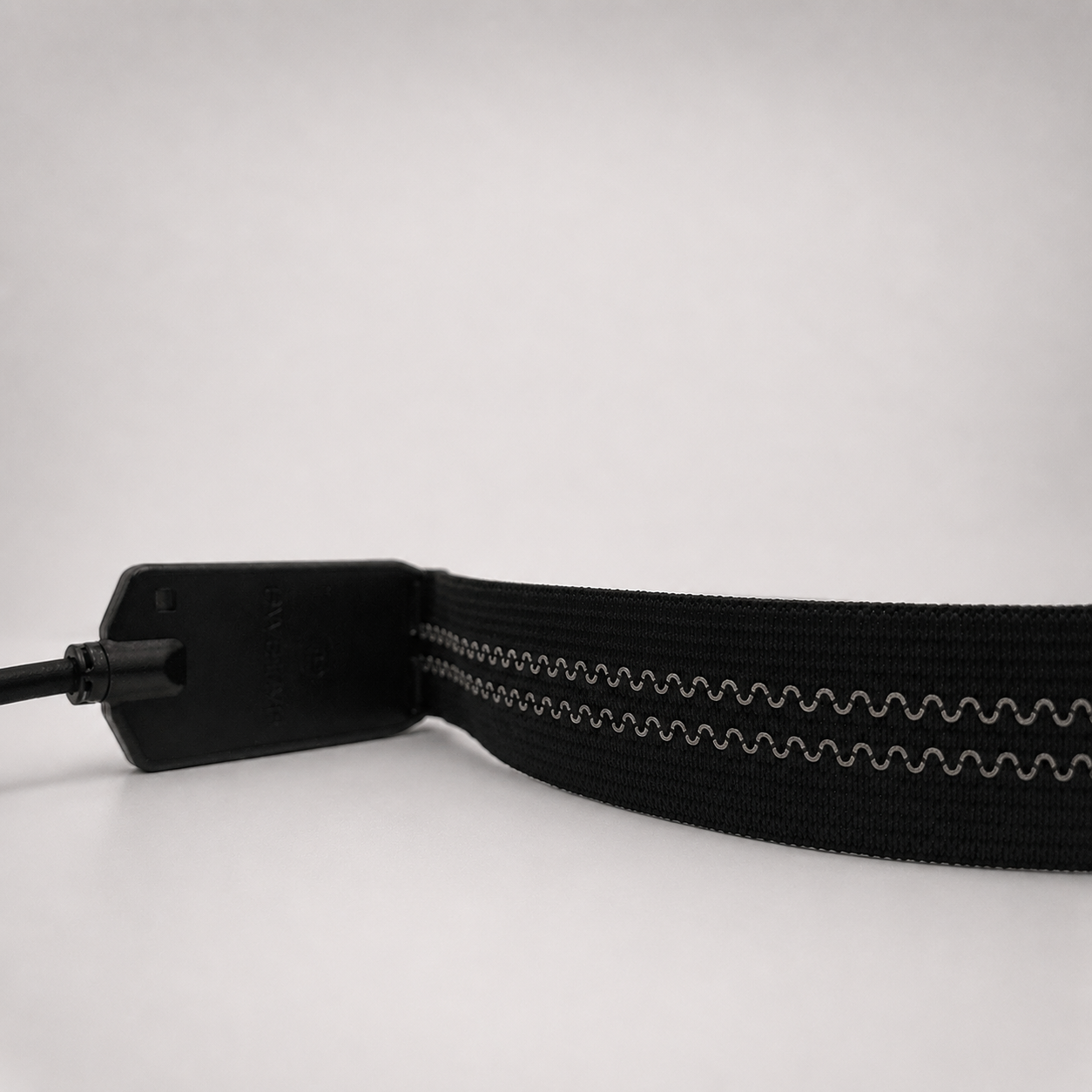
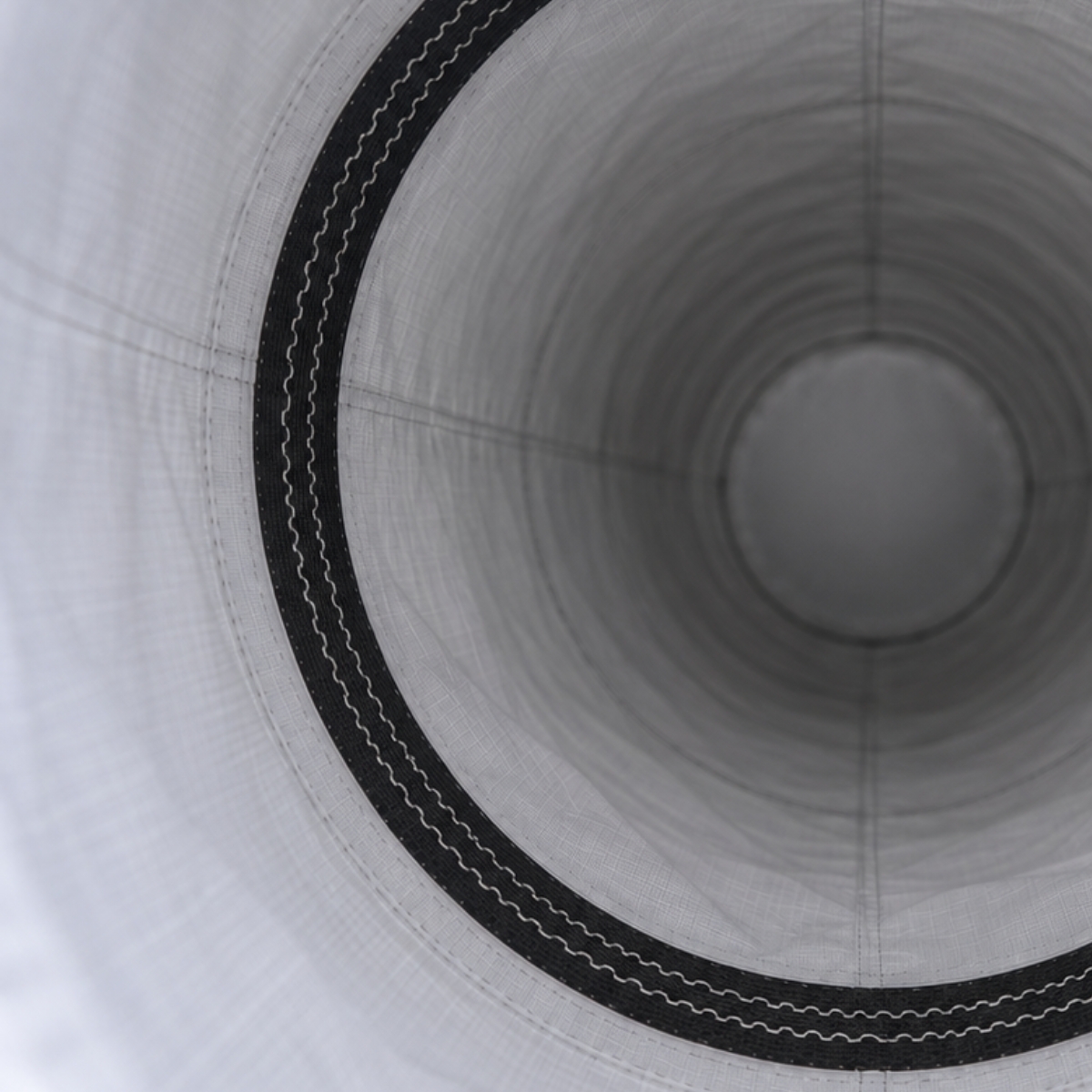
The principle is simple: the mechanical tension variation detection tape is positioned around the textile duct in a specific area. The tape does not need to be wrapped around the entire length of the duct. It can be integrated at one or more strategic points, forming a ring around the duct's cross-section, or wrapped around a section of the duct along a defined length.
When the duct operates under normal conditions, the tape is in a given mechanical state. If the duct changes, its shape changes too. This alteration causes a mechanical variation that can be detected by the tape.
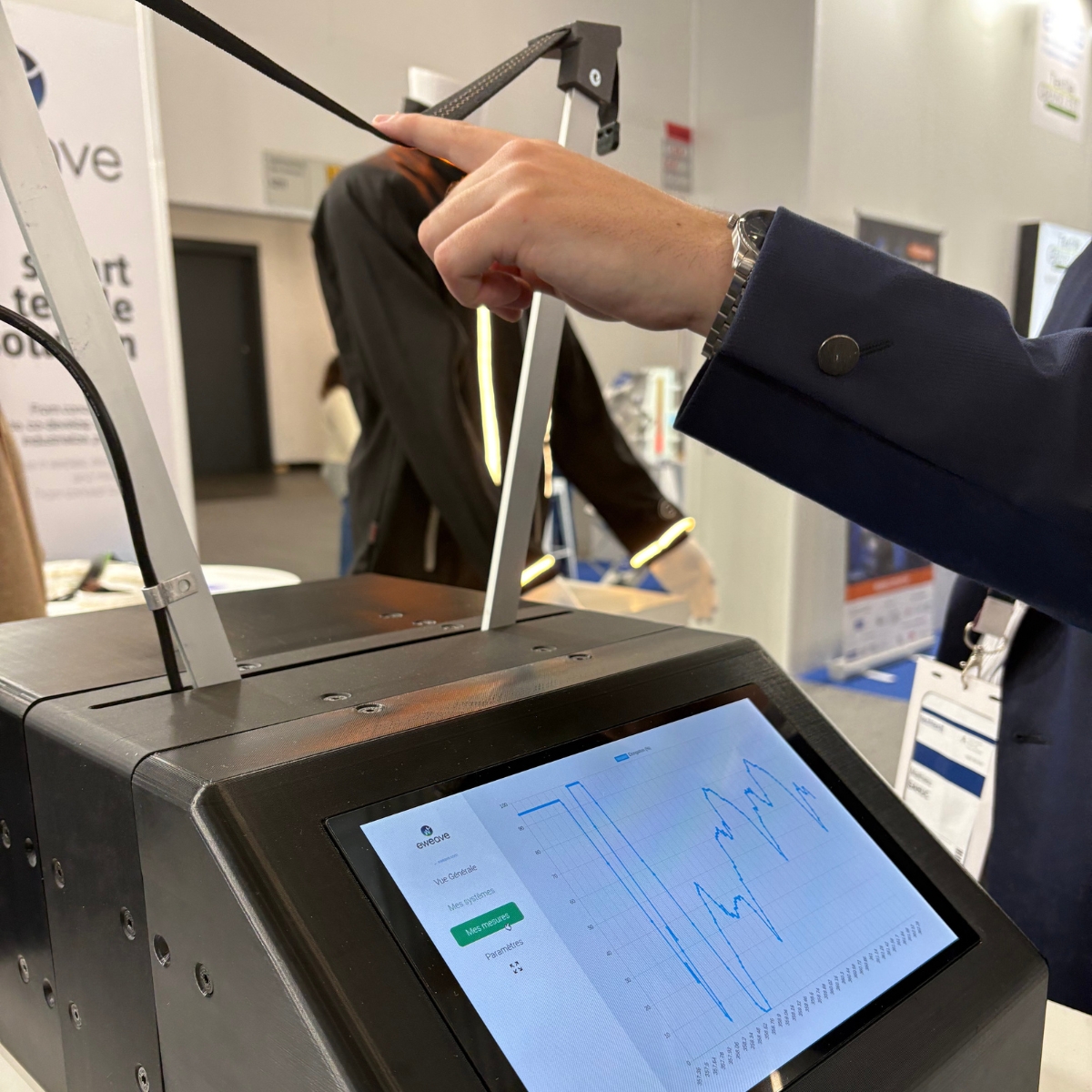
The data can then be monitored via a monitoring interface and, depending on the settings defined, trigger an alert or notification if an abnormal variation is detected.
What can be detected in a textile duct?
The aim is not simply to determine whether the duct is “inflated” or “deflated”. The key is to monitor its mechanical behaviour over time.A gradual change in its condition can therefore be detected when it results in a measurable change in the textile material. This may, in particular, make it possible to detect:
-A gradual change in the duct's configuration
-A loss of pressure resulting in a mechanical change in the textile material
-Unusual behaviour compared with the expected condition
-A variation significant enough to trigger an alert
A solution tailored to each application
There is no single way in which a textile duct operates. Material, diameter, operating pressure, tension level and extent of deformation all influence the behaviour of the structure.Detection must therefore be designed around the specific application.
At Eweave, every project is assessed on an individual basis, in collaboration with our clients and their teams.Tape positioning, integration and sensitivity: we work together to develop a solution that meets the specific requirements and constraints of each project.
Looking to monitor the condition of a textile duct? Are you developing a textile duct, an inflatable system or a flexible structure whose condition needs to be monitored?